
The Tennessee ground map.
Pick a region and tap a city to see the ground beneath it, the foundation problems to watch for and the drive from Nashville. 58 cities, seven kinds of ground. Free, with no signup.
- Seven ground types
- 58 cities
- Free, no signup
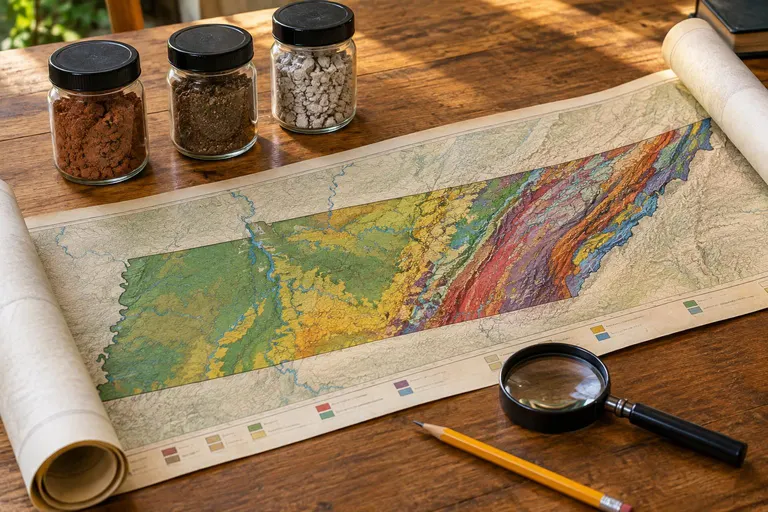
- Loess and river soils
- Highland Rim and Nashville Basin
- Cumberland Plateau
- Valley and Ridge
- Blue Ridge mountains
- Ground here
- Watch for
- Straight-line distance
- Drive time, illustrative
- Neighborhoods we cover
Ground types are illustrated from general geology and vary from lot to lot, so a site visit or soil test is the only way to know your own. Drive times assume 45 mph on estimated road miles and are illustrations.
Seven kinds of ground, seven foundation stories.
Nashville Basin: clay over limestone
The Nashville Basin is shallow limestone under a blanket of clay. The clay swells in wet seasons and shrinks in dry ones, the rock below can be uneven and cavities called karst features, including sinkholes, are part of the landscape. Foundations here move a little with the seasons, and sometimes a lot, so cracks, sticking doors and sloping floors are good reasons for an inspection.
Memphis area: river soils and high water
The Memphis area sits on thick silt and clay near the Mississippi River, with a high water table, humid summers and big trees that pull moisture from the soil. Crawl spaces stay damp, pier foundations shift and basements and slabs see water pressure. Good drainage and moisture control protect the structure.
West Tennessee: loess silt and clay
West Tennessee sits on deep loess, a windblown silt, and clay layers that hold water and move. The land is flat, so water can pool near the house, and slabs and footings settle unevenly. Drainage, foam lifting and piers carried down to firm soil are common answers.
Northeast Tennessee: Appalachian foothills
Northeast Tennessee homes are built on steep ground, often on stone, brick or block foundations that have stood for generations. Slopes, springs and old walls need careful repair that respects the building, keeps water out and supports the structure for decades more.
Cumberland Plateau: sandstone and shale
On the Cumberland Plateau, sandstone caps and shale layers sit under thin, rocky soil. Rock is often close to the surface, lots slope toward the edges, and water finds its way through the layers. Good drainage, solid footings and dry crawl spaces matter most.
East Tennessee: valleys, ridges and limestone
East Tennessee's long valleys and ridges sit on folded limestone and shale with clay between. Sinkholes, slopes and moving water are all part of building here. Foundations on valley floors fight karst voids and damp air, and ridge lots fight slope creep and runoff.
Highland Rim: rolling hills and red clay
The Highland Rim is rolling red-clay country with long slopes and plenty of rain. Slopes make water, soil creep and retaining walls part of the foundation story. Hillside lots, walkout basements and long driveways need good drainage and walls that are built to hold back soil, not just look good.
Learn more about the ground and the fix.
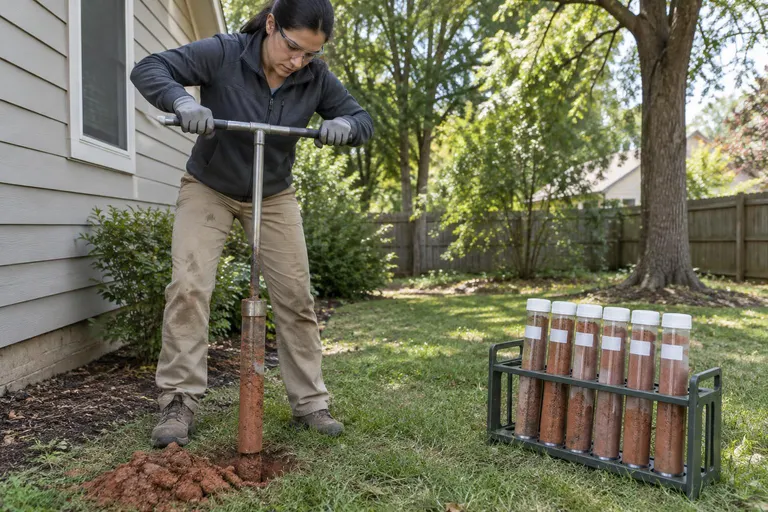 Inspections and PlanningSoil Testing and Site EvaluationKnow what is under you.
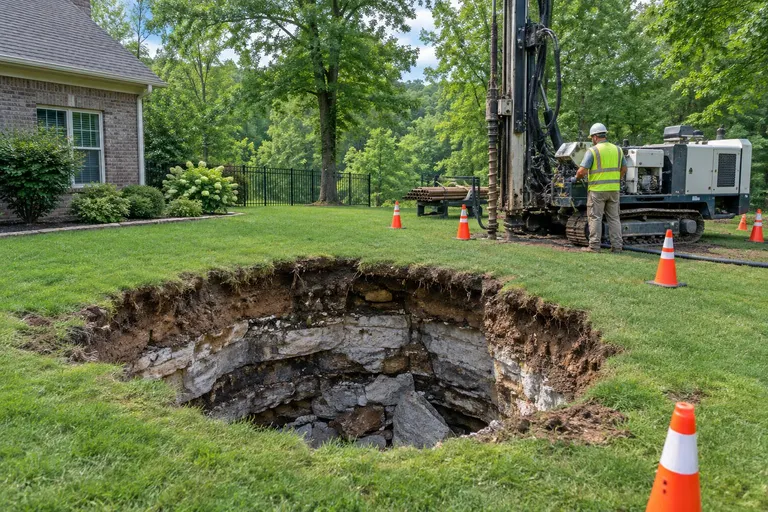 Specialty and CommercialSinkhole and Karst StabilizationFind the void, fill the void.
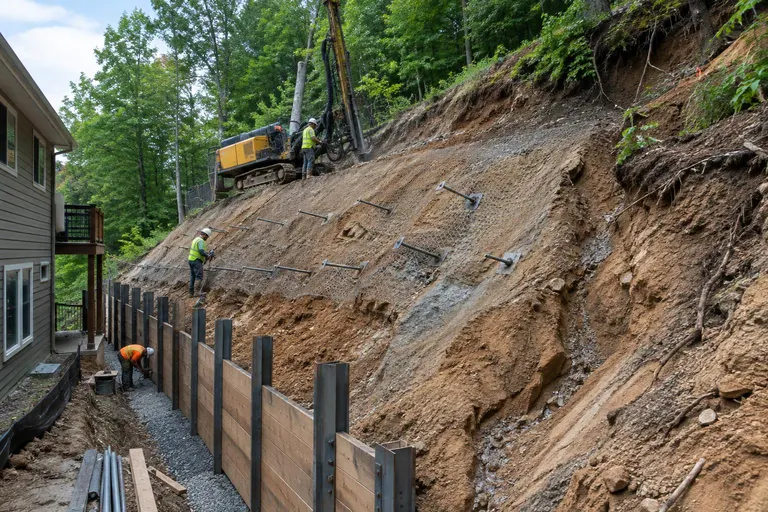 Specialty and CommercialHillside and Slope StabilizationStop the slide.
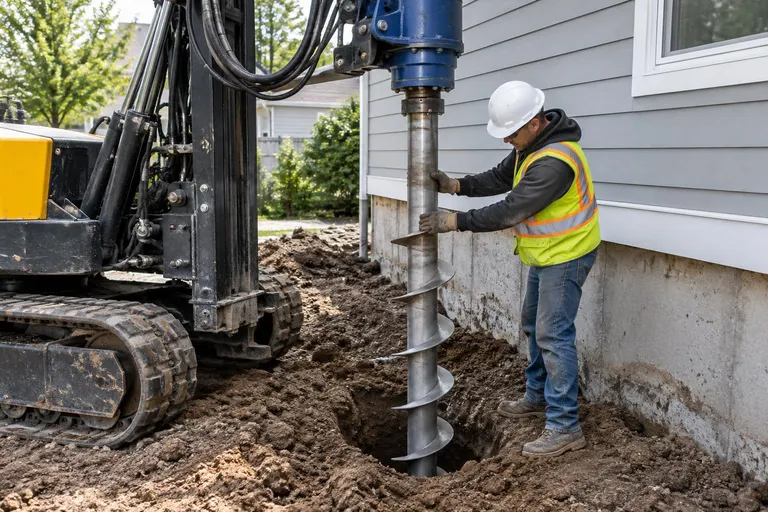 Foundation RepairHelical Pier InstallationScrewed down to solid ground.
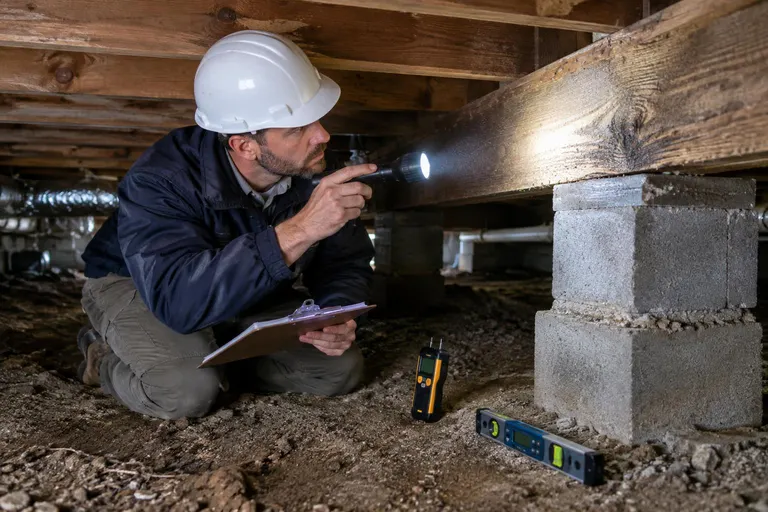 Inspections and PlanningFoundation InspectionsMeasure before you spend.
 Inspections and PlanningFree Foundation EstimatesKnow the number first.
Ground questions
What causes foundation problems in Tennessee?
Clay that swells and shrinks, shallow limestone with karst voids, steep lots and creeping slopes, loess silt in West Tennessee and water that collects near the house are the big ones. Poor drainage makes almost every other cause worse.
Do you handle sinkholes?
We evaluate and stabilize depressions and voids in limestone country with probing, grouting, caps, piers and drainage. If you see a new hole, keep people and vehicles away, divert water and call us.
What parts of Tennessee do you serve?
We serve 58 cities across Tennessee, from Memphis and Jackson in the west to Nashville and the Highland Rim, the Plateau, Knoxville, Chattanooga and the Tri-Cities in the east. If your town is not listed, call 615-209-7643 and we will confirm.
Want to know your own lot?
A site visit or soil test tells you what is under your house and what it means for your foundation.