
Move the water around your house.
A trench of gravel and perforated pipe collects groundwater and runoff and sends it away from foundations, patios and low spots in the yard.
- Timeline: Days
- Parts: Fabric, gravel, perforated pipe, outlet
- Slope: Planned from the site
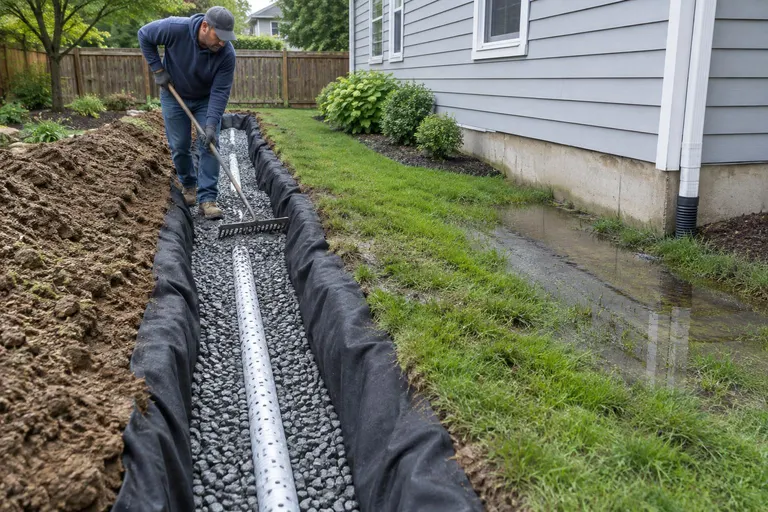
What it is, and why it matters.
A French drain is a sloped trench with fabric, clean gravel and a perforated pipe. Water in the soil moves into it and flows to a safe outlet instead of building up against your foundation.
We design the route and slope, choose between curtain, footing and surface drains, and finish with outlets and landscaping so it works quietly for years.
Four things done right.
Designed route
The path and slope are planned on site.
Filtered
Fabric keeps silt from clogging the pipe.
Clear outlet
Water exits to a safe place.
Landscape restored
Sod or stone covers the trench.
From first call to french drains.
- 01
Study the water
We watch where it comes from and goes.
- 02
Dig and line
A sloped trench is cut and lined with fabric.
- 03
Pipe and gravel
Perforated pipe is bedded in clean stone.
- 04
Outlet and finish
Water exits cleanly and the surface is restored.
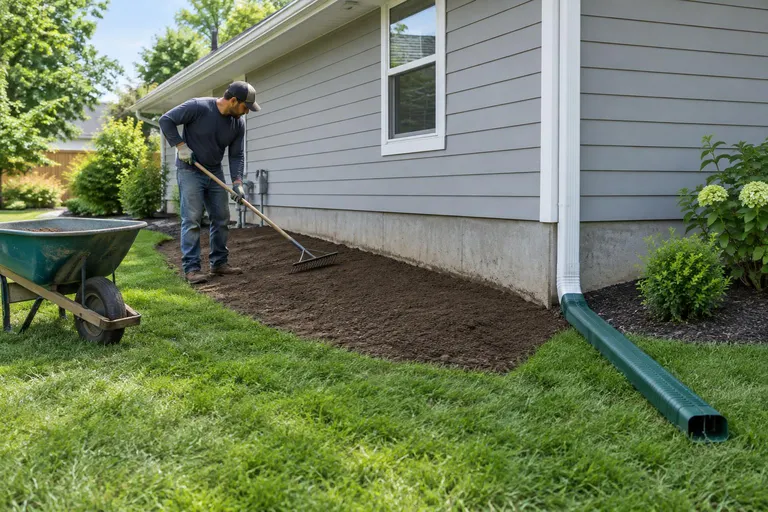
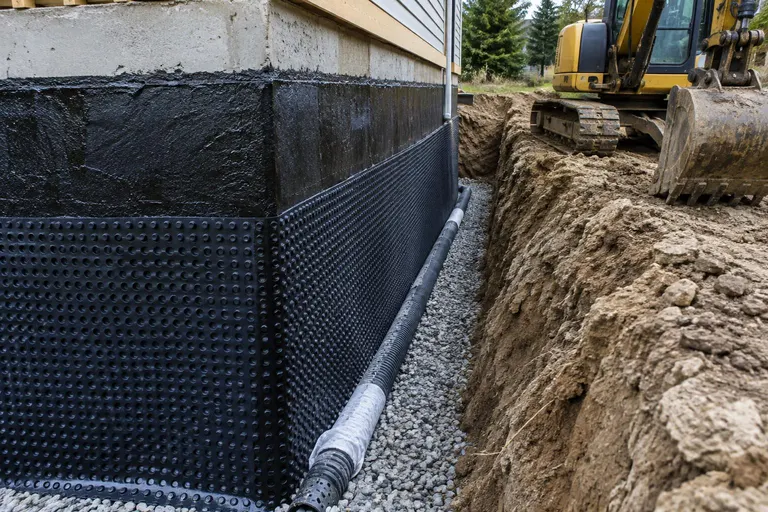
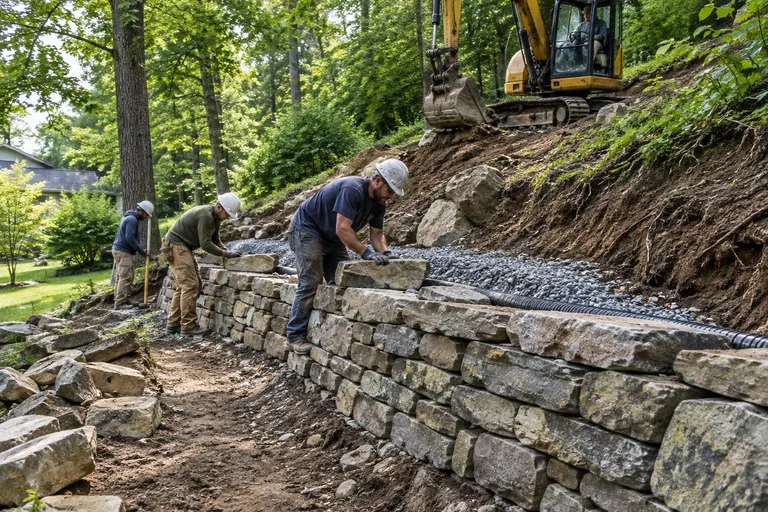
French Drains across Tennessee.
We do this work in 58 cities, from Memphis and Jackson to Nashville, Knoxville, Chattanooga and the Tri-Cities.
French Drains: common questions
Where does a French drain send the water?
To daylight on a slope, a dry well, a storm drain where allowed or a pop-up outlet, always away from your foundation and your neighbors' property.
How much does a French drain cost?
Commonly published ranges run roughly twenty to fifty dollars or more per linear foot depending on depth, access and materials.
How do I get a price for french drains?
Fill in the form or call or text 615-209-7643. We confirm what is involved and send a written price, and most properties get a free estimate visit.
Ready to talk about french drains?
A short visit and a written price. A real person calls back, usually the same day.