
A slab built on firm, dry ground.
A prepared base, vapor barrier, reinforcement and thickened edges create a slab foundation that resists cracking and moisture.
- Timeline: Days
- Base: Compacted gravel
- Reinforcement: Rebar or post-tension
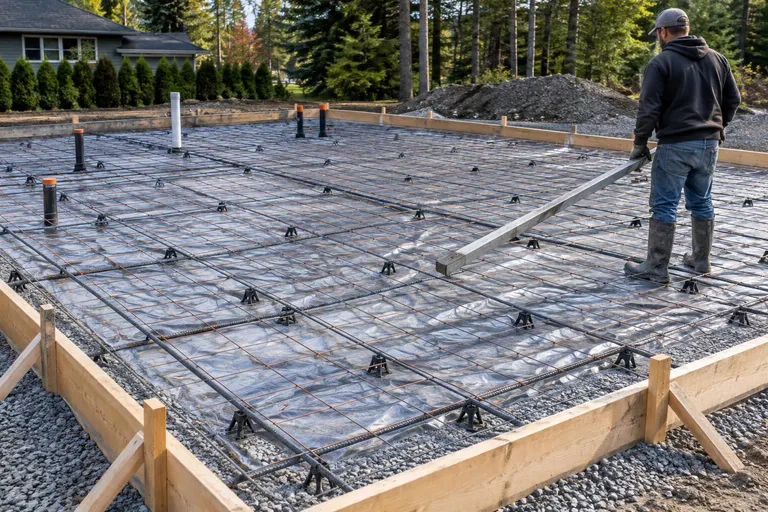
What it is, and why it matters.
A slab is only as good as what is under it. We compact the base, grade for drainage, lay a vapor barrier and place reinforcement before concrete is poured and finished, and control joints guide cracking.
On expansive clay or fill, we use thickened edges, post-tension or piers, as the soil report calls for.
Four things done right.
Compacted base
Uniform support under the concrete.
Reinforced
Steel placed and supported correctly.
Moisture control
Barrier under the slab.
Finished and cured
Proper curing reduces cracking.
From first call to slab-on-grade foundations.
- 01
Prepare the site
Grading and base are compacted.
- 02
Form and reinforce
Forms, barrier and steel are set.
- 03
Pour and finish
Concrete is placed and finished.
- 04
Cure
The slab is protected while it gains strength.
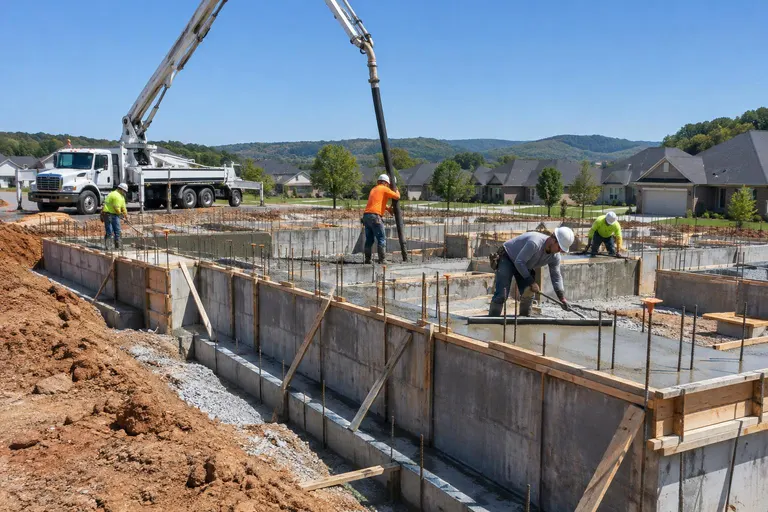
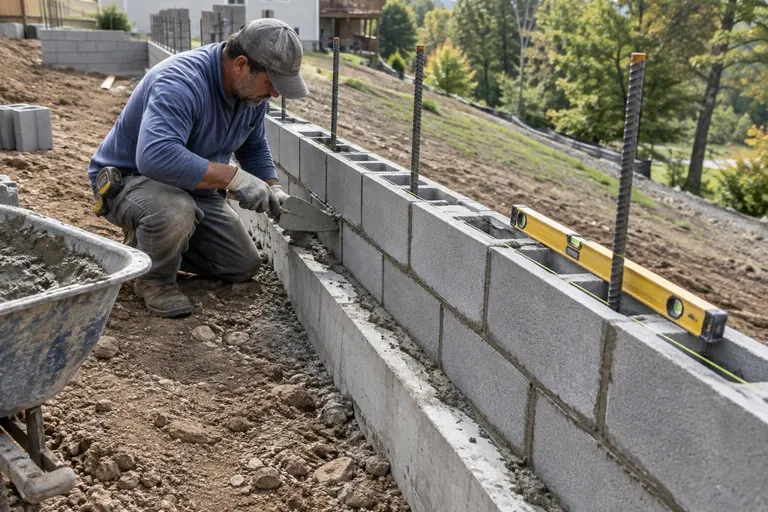
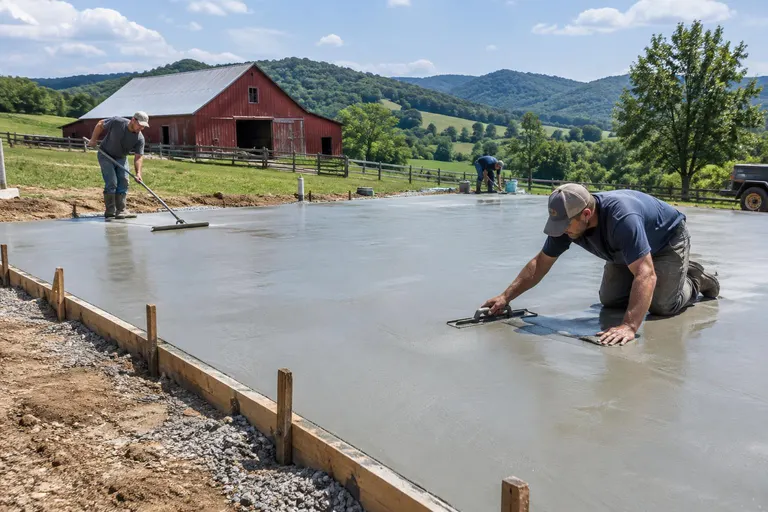
Slab-on-Grade Foundations across Tennessee.
We do this work in 58 cities, from Memphis and Jackson to Nashville, Knoxville, Chattanooga and the Tri-Cities.
Slab-on-Grade Foundations: common questions
How thick should a slab be?
House slabs are commonly four inches or more, with thicker edges, and the engineer sets the design for your soil and loads.
Why do new slabs crack?
Shrinkage and movement cause some cracking. Control joints and good curing guide it so it is not a problem.
How do I get a price for slab-on-grade foundations?
Fill in the form or call or text 615-209-7643. We confirm what is involved and send a written price, and most properties get a free estimate visit.
Ready to talk about slab-on-grade foundations?
A short visit and a written price. A real person calls back, usually the same day.