
The foundation cutaway.
Pick a problem and a kind of Tennessee ground, then watch a cutaway house get fixed: piers screw down to firm soil, walls are braced, water is pumped out, sunken slabs are lifted. See the method, the depth, the time and a planning range. Free, with no signup.
- Four problems
- Four kinds of ground
- Free, no signup
- Method
- --
- Supports to
- --
- Typical time
- --
- Planning range
- --
- What you are seeing
- Pick a problem, then press Fix it
Saved. It will travel with your estimate request below.
An illustration, exaggerated for clarity, with rounded planning numbers. Real foundations move by fractions of an inch, and a real plan starts with an inspection and measurements.
Five things that decide how a foundation is fixed.
The cause comes first
Soil, water and load decide the method, not the crack alone.
Depth matters
Piers must reach soil or rock that can carry the house.
Water is the accelerator
Drainage keeps clay stable and walls from being pushed.
Lifting is limited
A house goes back toward level as far as the structure allows.
Verify the result
Levels and elevations are rechecked after the repair.
Get your number
A short visit turns all of this into one written price. Ask for my estimate
Learn more about each fix.
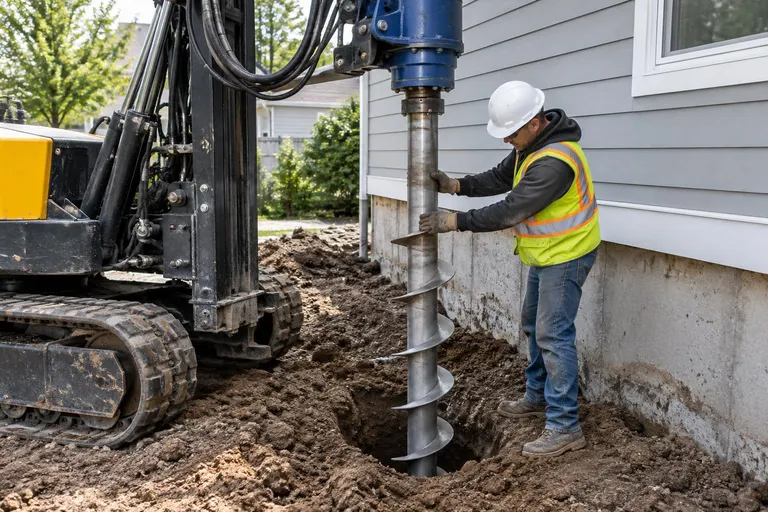 Foundation RepairHelical Pier InstallationScrewed down to solid ground.
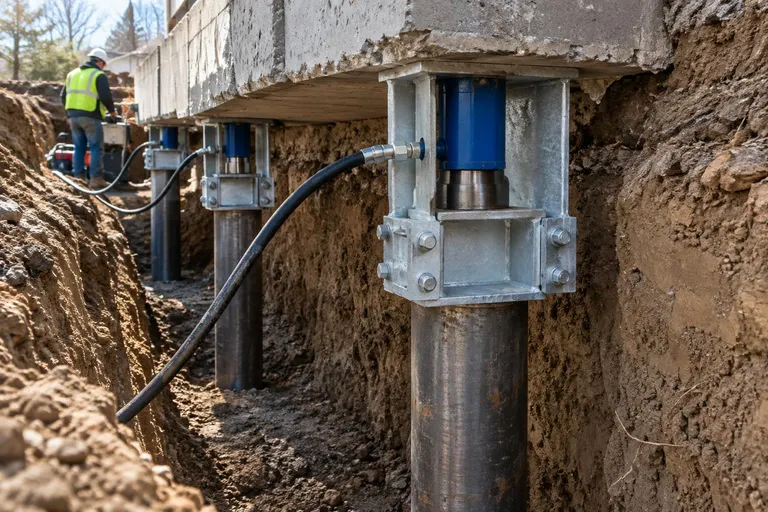 Foundation RepairPush Pier UnderpinningPushed to bedrock or firm soil.
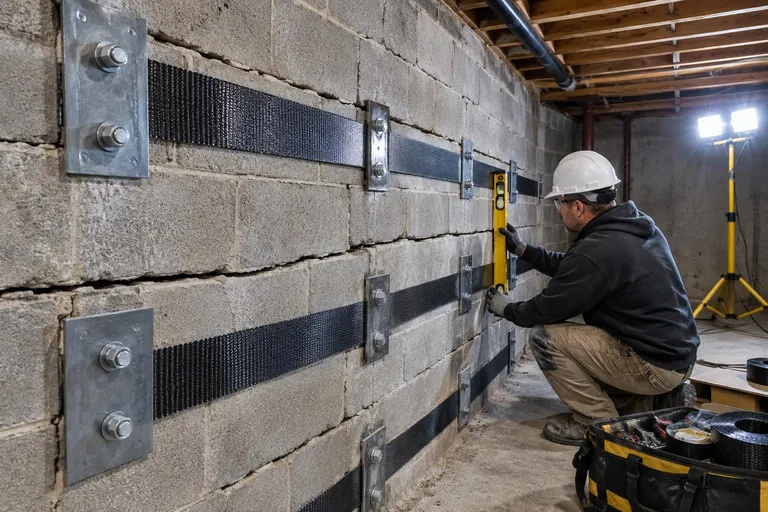 Foundation RepairBowing Wall RepairHold the line, then drain it.
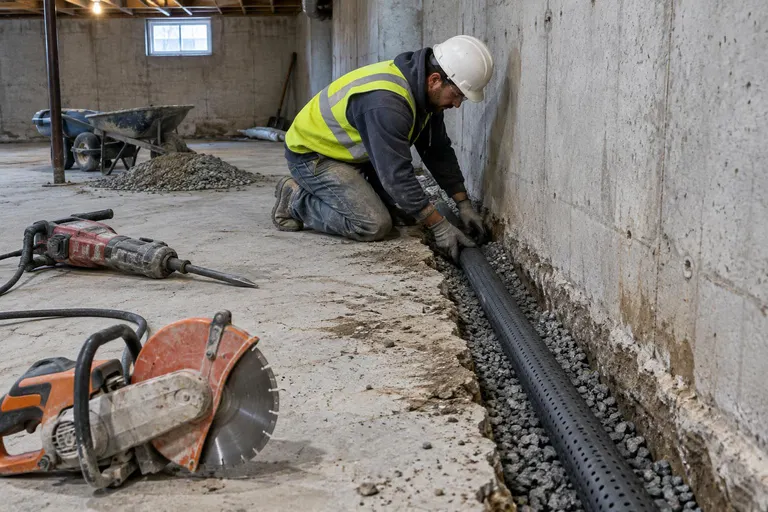 Waterproofing and DrainageInterior Drain SystemsCatch it before it floods.
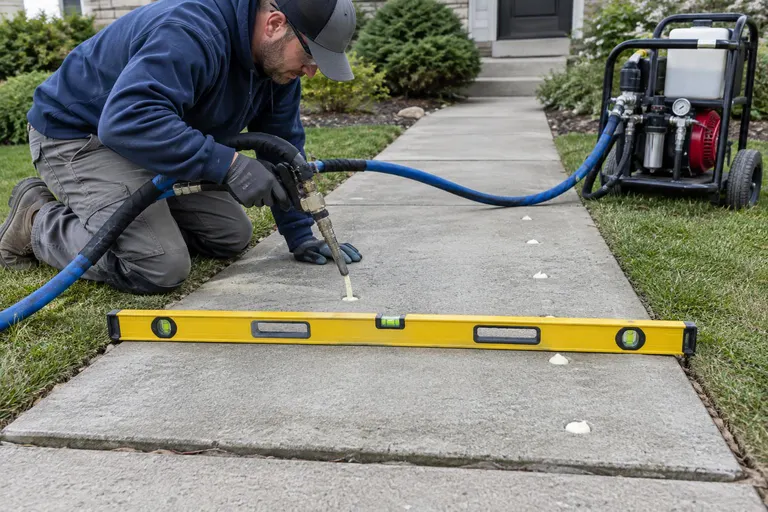 Slab and Concrete LiftingPolyurethane Foam LiftingLift with foam, not mud.
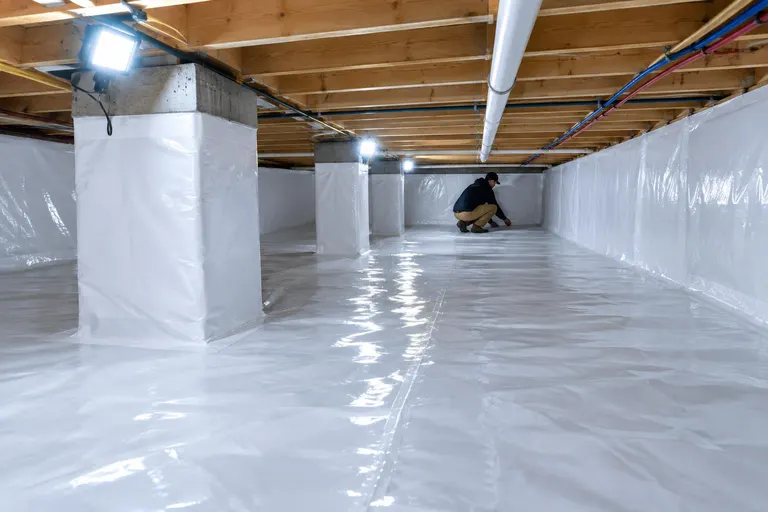 Crawl SpacesCrawl Space EncapsulationSeal out the humidity.
Cutaway questions
How do I know if my foundation has a real problem?
Stair-step or widening cracks, horizontal cracks in basement walls, doors and windows that stick, sloping floors, gaps at the trim and damp crawl spaces are all worth an inspection. Thin vertical hairline cracks are often cosmetic. Our Crack Reader gives a first read.
What is the difference between helical and push piers?
Helical piers are screwed into the ground until torque shows they are carrying the load, and push piers are driven down to a firm layer using the weight of the structure. The right one depends on the soil, the load and access. Our Pier Planner shows both.
How much does foundation repair cost?
It depends on the problem. Commonly published ranges run from a few hundred dollars for crack injection to roughly $1,000 to $3,500 per pier, with full underpinning, drainage and encapsulation projects running into the thousands or tens of thousands. Our planners give a first view, and a free estimate gives you a written price.
Want your own house to look like this?
A free estimate measures your house and explains the cause, the method and the price in writing.